Your teams use AI agents.Their workflows lag behind.

Senora helps engineering organizations build and run software delivery workflows with AI agents—connecting planning, implementation, and production through the right context, platform capabilities, and controls.

Illustrative workflowOne change, six stages

Engineering context

Code, decisions, conventions, and infrastructure, retrieved for each task rather than once per project.

  1. 01Need and requirements

    Human

    issue + acceptance criteria

  2. 02Planning and design

    Human + agent

    approach + affected systems

  3. 03Implementation

    Agent

    branch + change set

  4. 04Validation and review

    Automated + human

    checks + review record

  5. 05Deployment

    Policy

    canary, then production

  6. 06Feedback

    Team

    incidents, metrics, follow-ups

Situations

Recognise the pattern before the tooling

Where agent-driven delivery gets stuck

None of these start as an AI problem. They start as work that has to pass through people, repositories, and gates designed for a different volume of change.

01

Review can’t absorb the volume

Agents open changes in minutes. Review, checks, and release were sized for a few pull requests a day, so work accumulates around the people and gates that cannot move faster.

What we look at

We look for avoidable waiting and handoffs, then change the parts of the path that add nothing to the decision.

02

Every repository runs its own path

Standards drift between repositories and depend on which reviewer picks up a change. More changes, arriving from more sources, make that variation visible.

What we look at

We define repeatable workflows with shared standards, and where a repository genuinely differs, the variation becomes explicit and justified.

03

Agents miss the context behind the code

Decisions, conventions, and current state live across repositories, documents, and people. An agent that cannot reach them produces work that has to be corrected before review can begin.

What we look at

We identify which sources matter, how agents reach them, and where that context belongs in the workflow.

Services

Two offerings, two different outcomes

One produces alignment and a plan. The other turns that direction into a working, validated workflow. A workshop is an optional starting point, not a prerequisite.

See the full approach
01 / ConsultingDetails

Agent-Ready Engineering Consulting

Turn an agreed direction into a working, validated workflow, with the platform pieces and controls behind it.

For

Teams that know which workflow to fix and need it working, not just documented.

We work on

  • Assessment and detailed workflow design
  • Platform and tool integrations: repositories, CI/CD, environments
  • Context, permissions, checks, and approval points configured for the work
  • Pilot implementation, rollout support, and measurement
  • Documentation and handover

You receive

  • A designed workflow with explicit owners and control points
  • Working integrations for the pilot scope
  • Pilot measures and what to iterate
  • Runbooks and handover

A written proposal defines scope, deliverables, responsibilities, and acceptance criteria.

02 / WorkshopDetails

Agent-Ready Engineering Workshop

Understand one workflow, agree on the priority gaps, and choose a practical first pilot.

For

Stakeholders who own one workflow and want agreement before committing to implementation.

We work on

  • One facilitated day with the people who own the workflow
  • Four modules: the current workflow, ownership and controls, context and checks, the pilot
  • Decisions recorded against your repositories and standards

You receive

  • A map of the selected workflow
  • Prioritized gaps and constraints
  • Initial ownership and control decisions
  • A pilot brief with success measures and next steps

A workshop produces alignment and a plan. It does not include production implementation.

An example

Same task. A clearer way to deliver it.

Imagine a team using a coding agent to add a payment method to checkout. Here is how the workflow could change.

Illustrative scenario—not a customer case study.

Task

Add a payment method to checkout.

01

Define the work

Before

The agent starts from a short ticket. Missing requirements surface during review.

With a designed workflow

The team defines the requirements and acceptance criteria before implementation begins.

02

Provide context

Before

An engineer finds architecture notes, previous decisions, and repository conventions, then copies them into the agent’s session.

With a designed workflow

Relevant project sources are accessible through the workflow, and the agent is instructed to consult them before making changes.

03

Validate the change

Before

The reviewer has to ask which checks ran and whether the change meets the team’s standards.

With a designed workflow

Required checks run automatically, with results linked to the pull request for review.

04

Approve, release, and learn

Before

People coordinate approvals and release steps manually. Post-release findings can lose their connection to the original task.

With a designed workflow

Approval rules and release responsibilities are explicit. Deployment results and follow-up findings link back to the work.

What Senora does

We map the workflow with your team, identify the gaps, and design the context access, integrations, checks, and responsibilities it needs. We then help implement and evaluate the agreed changes in a focused pilot.

Discuss your workflow

Our approach

Map, design, then prove it with one team

The sequence is deliberately small. Each stage produces something your teams can use without us in the room.

  1. 01

    Map the workflow

    Follow one representative change from requirements through planning, implementation, validation, and release, with the people who own it in the room.

    Output · A workflow map that shows where work waits, repeats, or depends on a manual handoff.

  2. 02

    Design the changes

    With engineering, platform, and security, define the workflow, the context agents receive, responsibilities, and controls appropriate to each type of work.

    Output · A designed workflow with named owners, control points, and justified variations where repositories differ.

  3. 03

    Pilot and measure

    One team runs the new workflow against a measurable pilot. We compare avoidable waiting, rework, and time to production against the starting point, then iterate.

    Output · A running pilot with success measures and evidence of what changed.

Engineering project

Aquifer: engineering context for AI agents

Aquifer gives AI agents access to engineering context from project sources through MCP, with source references they can inspect.

Senora builds and uses it in its own work. It covers the context part of an agent workflow: agents retrieve the information, then reason and act with it. Aquifer does not manage the whole development lifecycle, enforce controls, approve changes, or guarantee correct output. Consulting engagements do not require it.

Interface
MCP over HTTP or stdio
Runs
Your own environment
Licence
Source-available, BSL 1.1
How sources become contextConcept
RepositoriesDecisionsConventionsInfrastructureContext for the taskretrieved, with source referencesAgent changefits the repo, ready for review
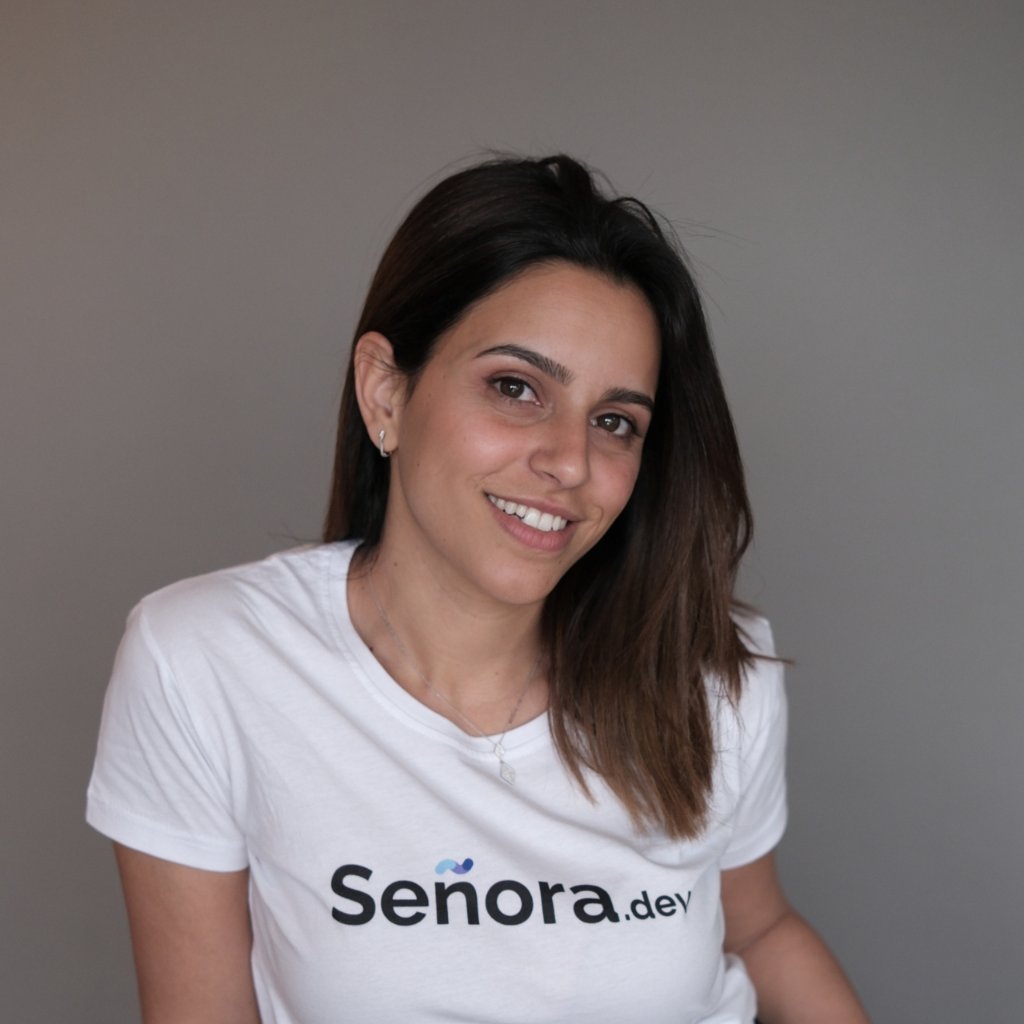
Shaked Braimok Yosef, founder of Senora

Shaked Braimok Yosef · Founder

Founder

Shaked Braimok Yosef

Senora is led by Shaked Braimok Yosef. Her background is platform engineering: infrastructure, developer tooling, and the delivery pipelines teams actually run on.

That is why Senora starts from the pipeline rather than the prompt. Adapting a workflow for agents changes the foundations platform teams already own: the identity an agent acts under, the checks that run on a change, the paths agents and people share, and the tooling that has to be built when nothing suitable exists.

She works directly in repositories, infrastructure, and delivery pipelines, and builds an engineering context tool (Aquifer) in the open. That hands-on view shapes how engagements are scoped: one workflow, small changes to the path, an owner on your side, and a pilot that can be measured before anything is scaled.

  • HashiCorp Ambassador
  • AWS Community Builder
  • Platform Engineering Ambassador

Make AI agents part of how your team delivers.

Using coding agents—or planning your first pilot? Let’s discuss what you want to improve, what is getting in the way, and a practical place to start.

Talk to Shaked

An introductory conversation to understand your goals and explore whether Senora can help.

Prefer email? shaked@senora.dev